Heimler & Proc – Symphony from the New World
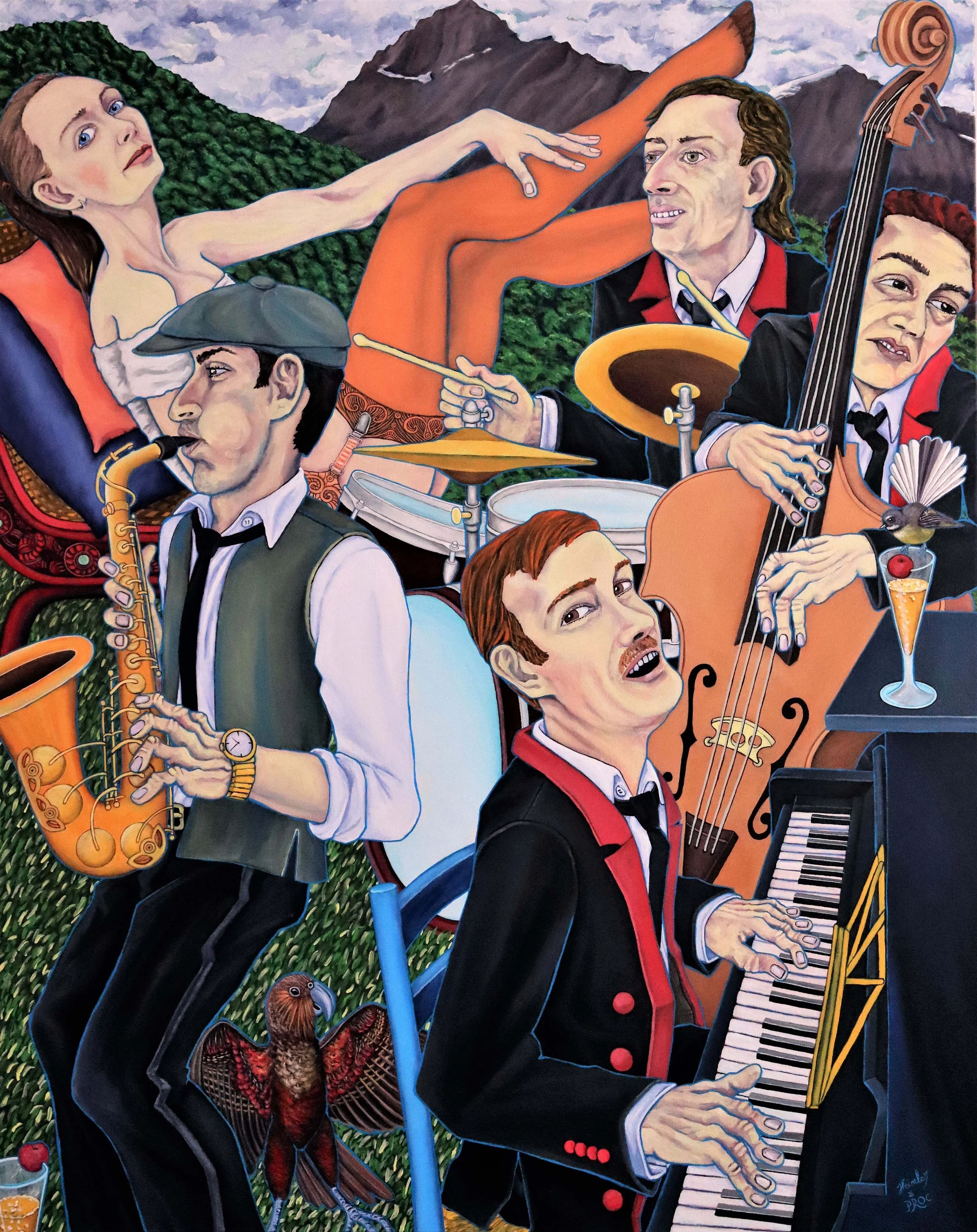
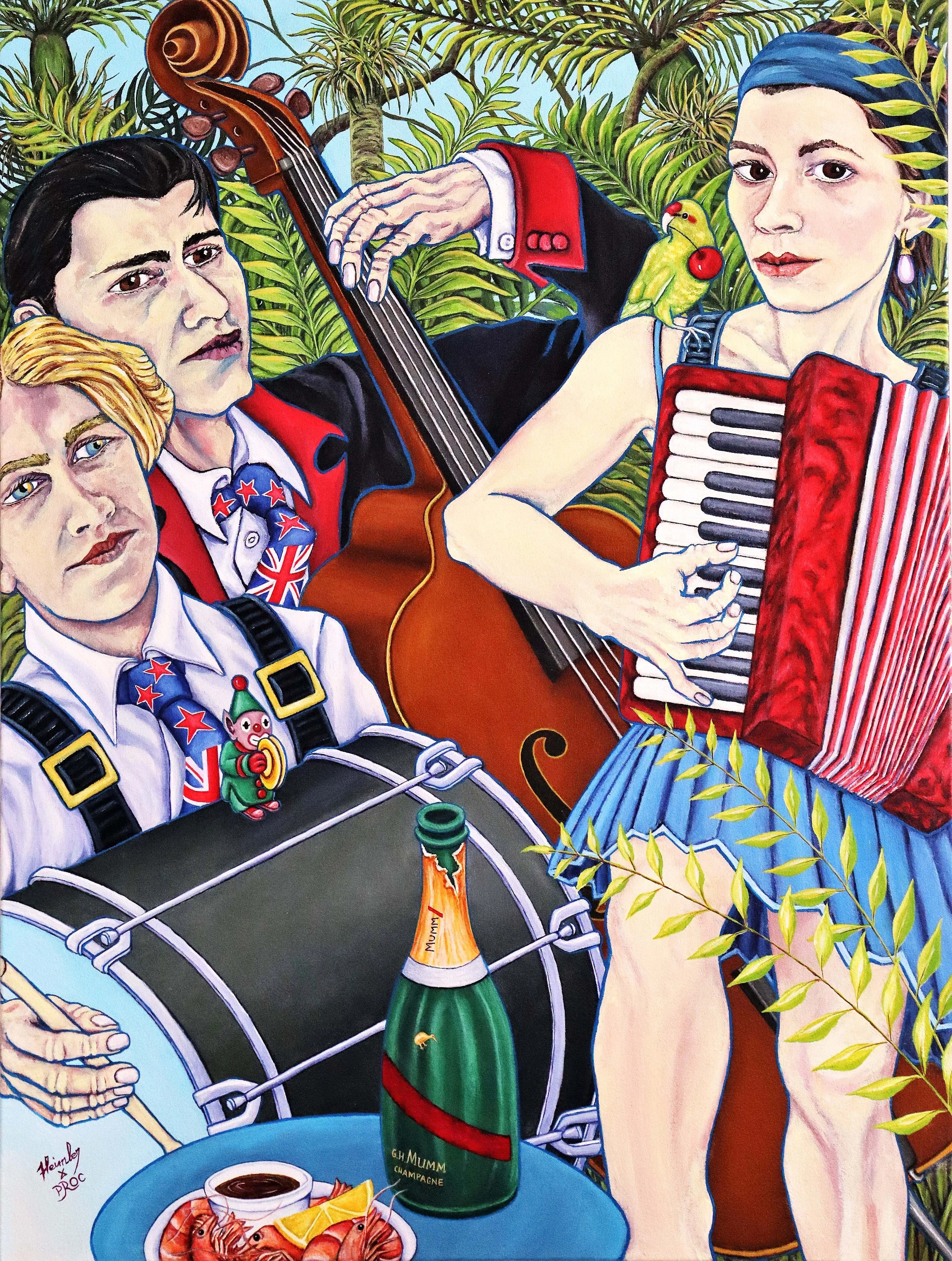
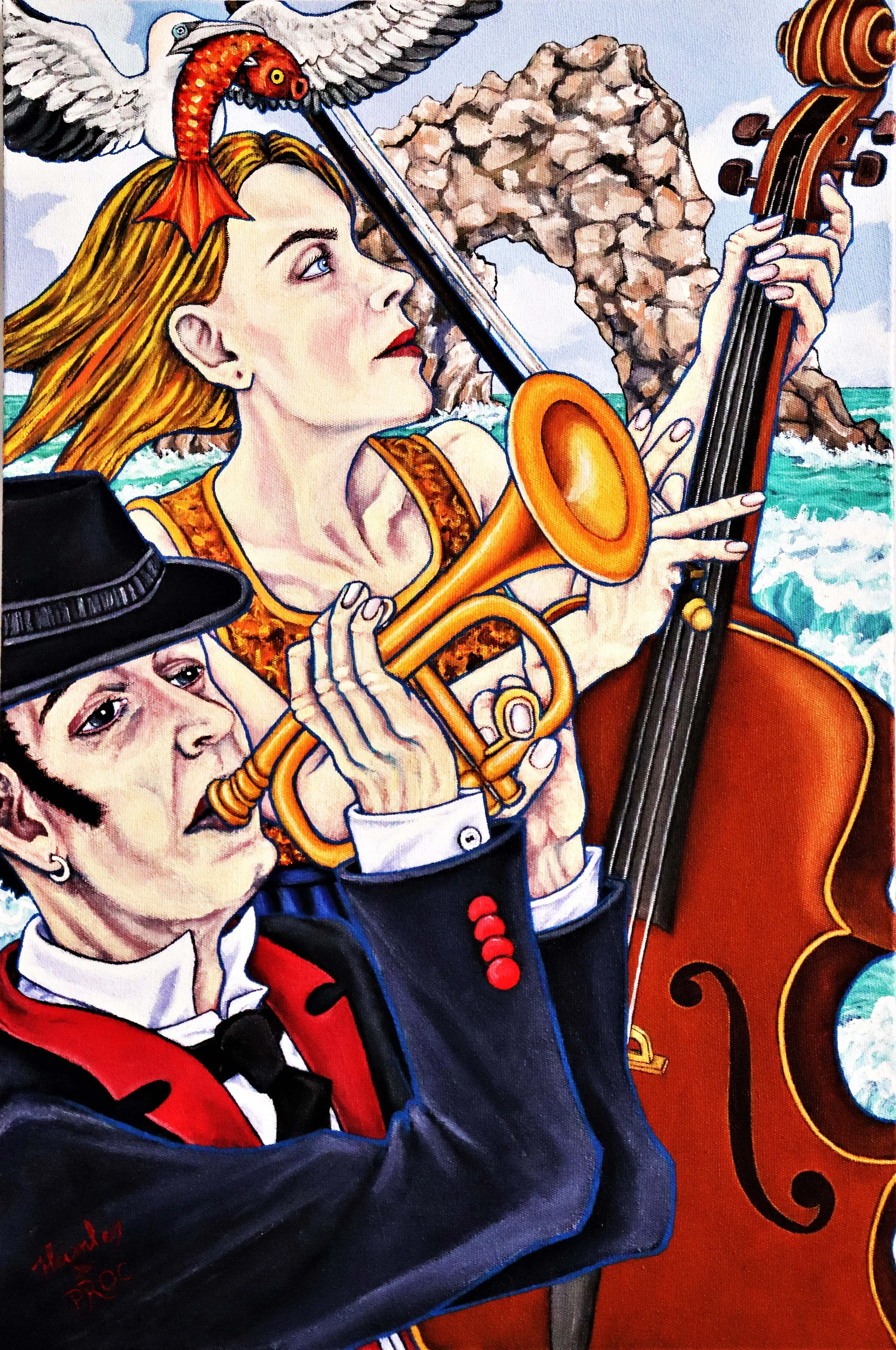
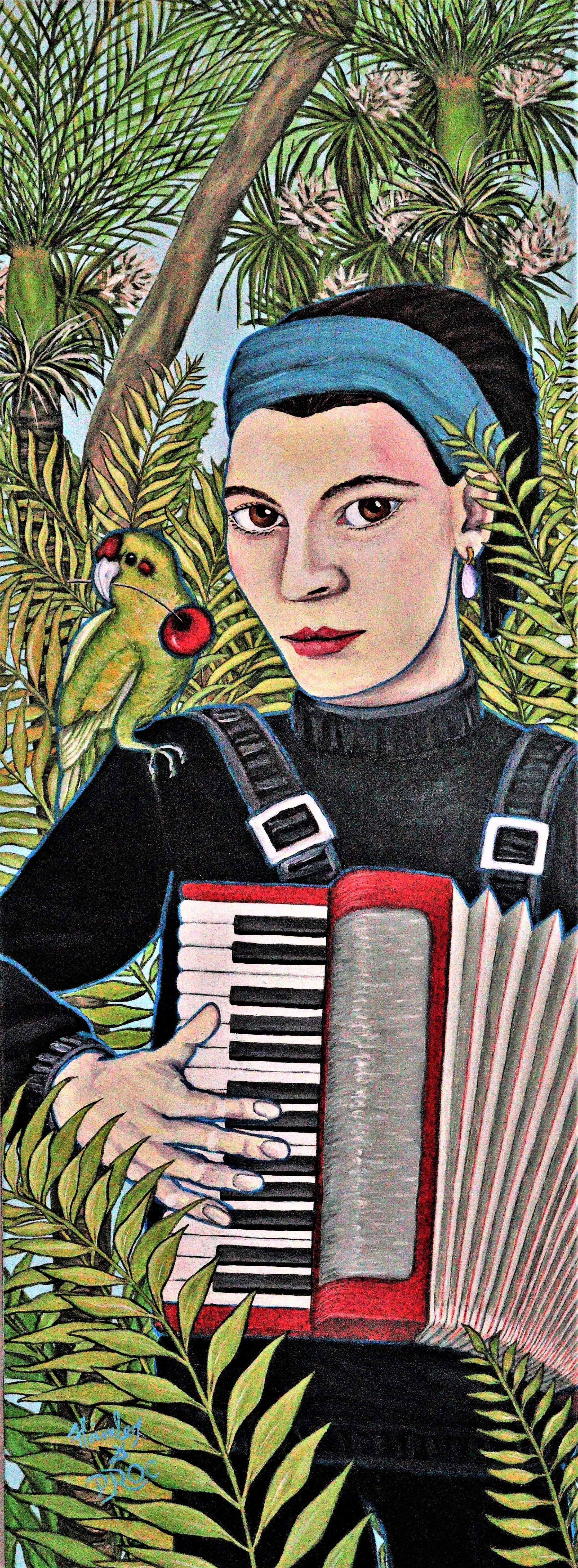
In their painting series 'Symphony from the New World', Heimler & Proc draw inspiration from Otto Dix’s iconic 'Grosse Stadt' (Big City). Where Dix captured the feverish atmosphere of a jazz club on the edge of a collapsing world and the anxious birth of a new, uncertain era, Heimler & Proc transpose this vision into a contemporary context.
Set against a local narrative, their musicians perform with the same underlying tension and foreboding that permeates Dix’s work. Through these paintings, the artists express their deep love for New Zealand and for music, while once again demonstrating their characteristic premonitory sensibility.
The pictorial language of Heimler & Proc is built on the vibration of colours, the dramatic opposition of light and dark, and a powerful rhythmic structure. These are the same fundamental principles found in music and — for those who know how to see — in nature itself.
With this series, they offer viewers a personal and contemporary pictorial interpretation of Antonín Dvořák’s 'Symphony from the New World', a work they consider strikingly relevant today. Through colour, light and rhythm, they seek to provide both aesthetic pleasure and moments of illumination.


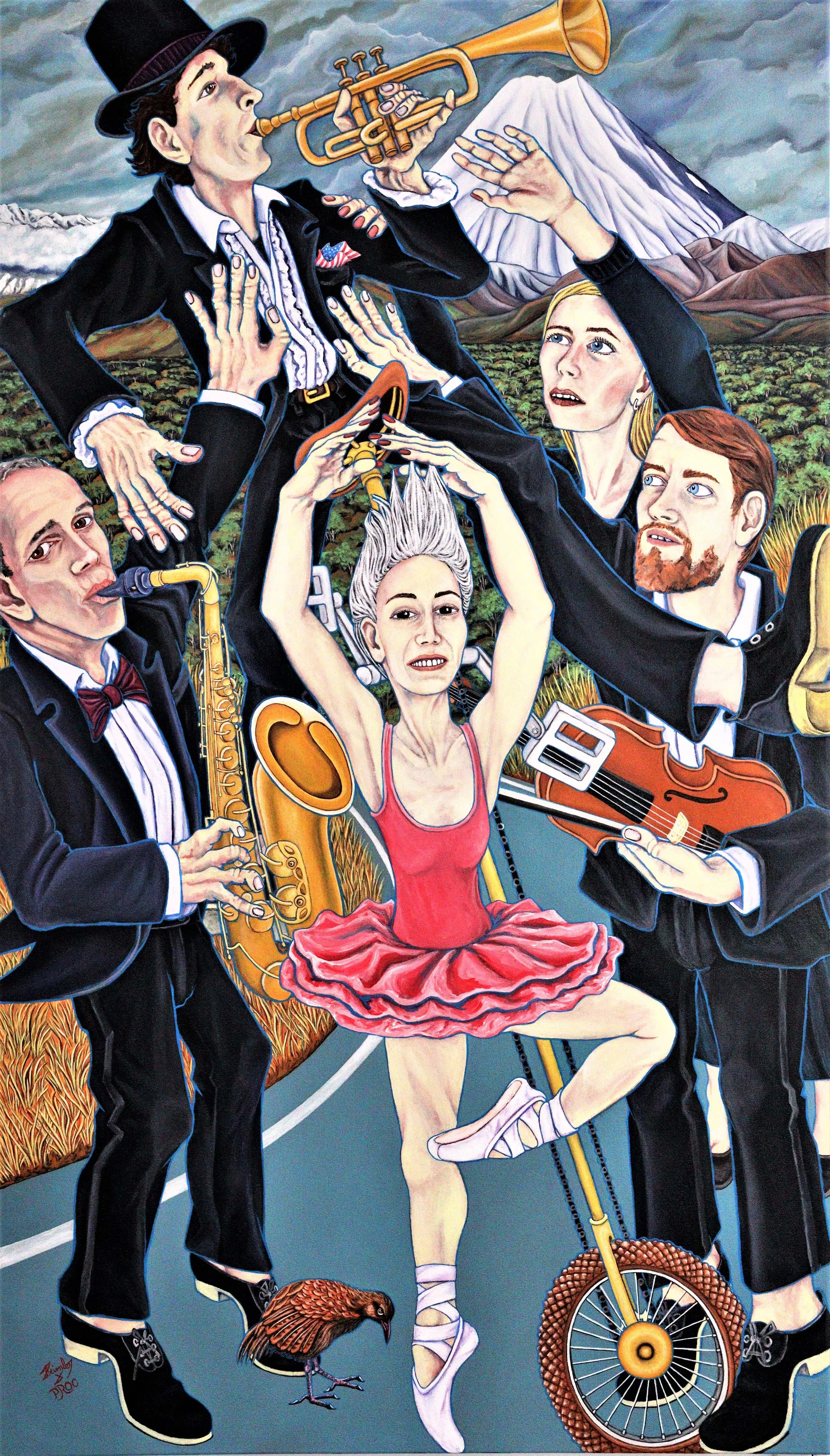
Unicycle’s Balance (190.5 × 111 cm) by Heimler & Proc is a large-scale allegorical painting conceived for the series Symphony of the New World. Its compositional architecture deliberately echoes the traditional medieval and Renaissance motif of the Descent from the Cross. In place of the crucified Christ appears a solitary unicyclist whose precarious equilibrium becomes the focal point of the drama. A handkerchief bearing the colours of the American flag is visible among the figures, underscoring the contemporary resonance of the scene.Surrounding the central performer are musicians—saxophonist, trumpeter, violinist—whose gestures simultaneously suggest support and subtle pressure. Some hands reach out as if to steady the rider; others appear to urge or destabilise him. At the heart of the composition stands a ballerina in a vivid crimson tutu. Poised on pointe, arms raised in an attitude of classical grace, she remains serenely detached, her gaze directed outward toward an unseen audience or inward upon herself, indifferent to the surrounding turmoil.The setting is the Desert Road of New Zealand. In the distance rises the solitary cone of Mount Taranaki, its snow-clad summit and steady presence offering a visual counterpoint of permanence and stability amid the human agitation in the foreground. Painted in 2026, the work functions as an allegory of a world in transition—an epochal shift in which artists themselves confront uncertainty, mutual dependence, and the necessity of balance. Through its fusion of sacred compositional structure, circus-like spectacle, and a recognisable New Zealand landscape, Unicycle’s Balance transforms a moment of physical precariousness into a meditation on cultural and historical change.